


By Ehsan Khan
Semantic SEO Consultant | Topical Authority Expert
Founder @ topicalmap.services
Introduction
This Standard Operating Procedure (SOP) provides a detailed, step-by-step guide for implementing topical maps using Koray Tugberk GUBUR’s framework. The methodology focuses on building topical authority through strategic content organization, semantic optimization, and comprehensive subject coverage.
The framework emphasizes understanding entity relationships, user intent, and contextual hierarchies to create content ecosystems that search engines can effectively understand and rank.
Key Benefits of This Framework
- Enhanced search engine visibility through topical authority
- Improved user engagement via strategic content organization
- Comprehensive semantic coverage of target topics
- Systematic approach to content planning and execution
- Data-driven decision making for content strategy
Identify the Source Context
Purpose
Establish the purpose and target audience of your content source. This foundation defines user expectations and ensures alignment with business goals.
Action Steps
- Define your primary audience demographics and psychographics
- Establish key business objectives for the content
- Articulate your unique value proposition
- Document the overarching theme and perspective
Example
For a site focusing on Electric Vehicles, the source context could be: Engaging tech enthusiasts and early adopters through comparative analysis, performance reviews, and sustainability insights about electric vehicle technology.
Implementation Tip: Ensure this context remains consistent across headers, meta descriptions, core content, and navigation. Use consistent terminology site-wide.
Define the Central Entity
Purpose
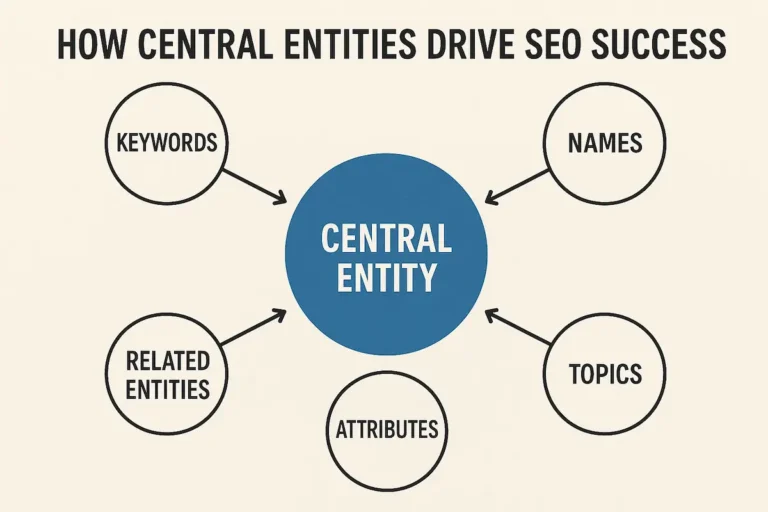
Identify the main subject that anchors all content across your site. This entity serves as the semantic hub.
Action Steps
- Select a well-recognized, clearly defined topic
- Confirm entity recognition through authoritative sources (e.g., Wikipedia)
- Verify sufficient search volume and commercial intent
- Document core attributes and characteristics
Implementation Tip: Use synonyms and semantic variations in headings and anchor text to expand topical reach without losing focus.
Research Ontology and Taxonomy
Purpose
Develop a structured understanding of relationships, attributes, and hierarchical organization — the backbone of your topical map.
Ontology Development
- Core attributes (battery types, range, charging speeds)
- Related entities (manufacturers, models, components)
- Properties and relationships
- Actions and processes
Taxonomy Modeling
| Level | Example |
|---|---|
| Central Entity | Electric Vehicles |
| Main Categories | Battery Technology, Charging Infrastructure, Models & Brands |
| Subcategories | Lithium-ion Batteries, Fast Charging, Tesla Models |
| Specific Topics | Battery Degradation, Supercharger Networks, Model 3 Specifications |
AI Prompt: “Develop a comprehensive ontology for [Central Entity], identifying all key properties, relationships, and hierarchical structures.”
Determine Central Search Intent
Purpose
Align content with users’ primary search goals. This bridges your central entity and source context.
Research Methods
- Google Search Console
- Keyword research tools
- People Also Ask (PAA)
- Autocomplete & related searches
Search Intent Types
- Informational
- Commercial
- Transactional
- Navigational
Research Buyer Personas & ICP
Segment Your Audience
- Demographics
- Psychographics
- Behavioral patterns
- Technology proficiency
Define for Each Persona
- Goals and objectives
- Pain points
- Preferred formats
- Journey-stage needs
Data Sources
- Customer interviews
- Google Analytics
- CRM & support data
- Social analytics
Determine Core and Outer Sections
Core Section
Represents your primary topical authority.
- Battery Technology
- EV Models by Brand
- Range & Performance
- Charging Infrastructure
- Cost & Incentives
Outer Section
- Industry News
- How-to Guides
- Sustainability
- Future Innovations
- Policy Updates
Critical Requirement: Outer content must link back to core pages to reinforce authority.
Create Detailed Content Briefs
| Component | Description |
|---|---|
| Target Keyword | Primary + semantic variations |
| Search Intent | User goal alignment |
| Macro Semantics | Main sections & themes |
| Micro Semantics | Entities, terminology |
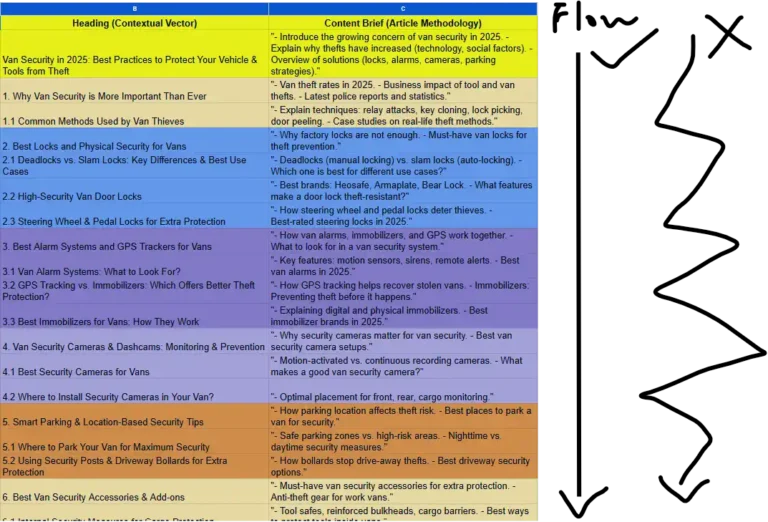
| Structure | H1–H3 layout |
| Word Count | SERP-driven length |
| Internal Links | Required references |
Final Considerations
- Quarterly topical reviews
- Content expansion
- Strategic internal linking
- User behavior monitoring
- Balance Vastness, Depth & Momentum (VDM)
Acknowledgments
Koray Tugberk GUBUR – Founder of Topical Authority & Holistic SEO
Muhammad Hamid Khan – SEO strategy contributions
Germans Frolovs – Topical mapping insights
SEO approaches vary. Test, validate, and adapt based on your own data.
Propagate the Intel
Transmission Feed