

In this SEO case study, you’ll learn how a topical map SEO strategy helped grow a SaaS website from 212K to 240K monthly organic traffic—without building backlinks.
Unlike traditional SEO approaches that rely heavily on backlinks, this strategy focused on topical authority, content structure, UX optimization, and semantic SEO to outperform competitors with significantly higher domain authority.
We’ll break down the exact framework, implementation steps, and results so you can apply the same strategy to your own website.
Executive Summary of the SaaS SEO Case Study
- Industry: Automotive SaaS (UK Market)
- Website Type: API-Based Car Data Platform
- Project Duration: 4 Months
- Initial Traffic: 212K Monthly Visits
- Final Traffic: 240.8K Monthly Visits (+13.5% Growth)
- Keyword Coverage: 35.1K → 55.5K (+58% Increase)
- Keyword Improvements: 8,000+
- Top 3 Rankings: 500 → 980 (+96% Growth)
- Keyword Volume Range: 40K – 2.2M Searches
Key Achievement
We achieved 13.5% traffic growth while improving rankings for 8,000+ high-volume keywords, significantly increasing commercial visibility and conversions.
The Challenge – High Traffic but Low Conversions
Despite strong traffic, the site was underperforming in terms of conversions.
Starting Metrics
- 212K monthly organic traffic
- Domain Authority: 25
- Authority Score: 42
- Referring Domains: 771
- Backlinks: 2.9K
- Indexed Pages: ~140
Core Problems Identified
- Core service keywords not ranking in Top 3
- Low conversion rates
- High bounce rate
- Users couldn’t easily find the main tool
The David vs Goliath SEO Problem
We were competing against much stronger domains:
- Competitors had 2–3x higher Domain Authority (35–60 vs 25)
- Competitors had 2–6x more content pages (350–850 vs 140)
- Strong backlink profiles
The Key Question
How do you outrank stronger competitors with fewer pages and lower authority?
Key Issues Identified Through SEO Audit
H3: 1. Poor UX Design on Service Pages
- Search tool was hidden on the side
- Looked like a form instead of a tool
- Not visible on blog pages
Competitors:
- Placed tool under hero section
- Visible on every page
- Easy to use
2. Content Structure Confusion
- Commercial keywords treated as blog posts
- High-volume topics buried in blog section
- Weak service page signals
3. Navigation Limitations
- Only 4 services visible
- Users confused about differences
- Missed keyword opportunities
Topical Map SEO Strategy for SaaS Growth
Since we couldn’t compete on backlinks or authority, we focused on:
- Topical Authority SEO
- Content Clusters & Semantic SEO
- User Experience (UX)
- Conversion Rate Optimization (CRO)
This strategy was about creating the right pages—not more pages.
Phase 1 – UX and CRO Optimization
H3: Search Tool Repositioning
- Moved the tool under the hero section
- Made it visible on all pages
- Added it to blog posts
- Simplified UI
Results
- Increased engagement
- Higher tool usage
- Improved conversions
Phase 2 – Content Architecture Redesign
Expanding Core Services
We increased navigation visibility from 4 → 9 services:
- MOT Check
- Vehicle Check
- Car History Check
- Stolen Car Check
- MOT History Check
- Free Car Check
- Car Checker
- Ask MID
Impact
- Better internal linking
- Improved discoverability
- Stronger topical signals
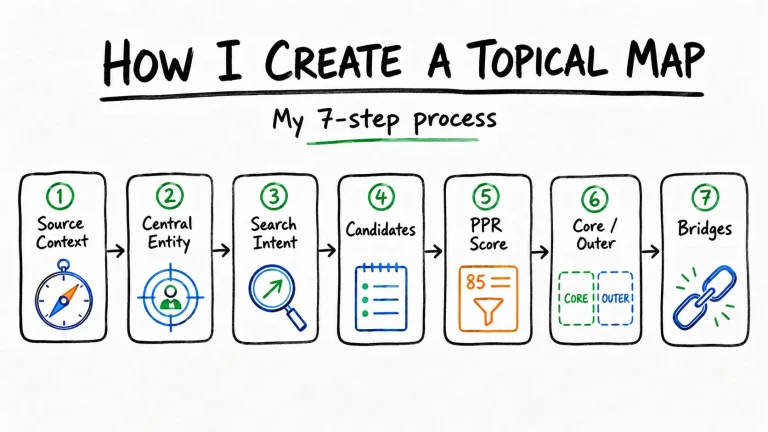
Phase 3 – Topical Map SEO Implementation
We built a 60-topic topical map based on:
- High-volume keywords (40K–300K)
- Search intent analysis
- Semantic relationships
Content Strategy
Each page:
- Covered the main topic fully
- Included related subtopics
- Answered user queries
- Used structured data
Example Topic Cluster – MOT Check
Instead of creating multiple thin pages, we built one comprehensive content node:
- What is an MOT check
- MOT check free
- MOT history check
- Check MOT status
- When is my MOT due
This improved topical authority and keyword coverage.
Results – Quality Over Quantity
Performance Comparison
| Metric | Before | After |
| Traffic | 212K | 240.8K |
| Keywords | 35.1K | 55.5K |
| Top 3 Rankings | 500 | 980 |
Growth Highlights
- +28.8K traffic increase
- 8,000+ keyword improvements
- 58% keyword growth
Keyword Performance Insights
We targeted ultra-high-volume keywords (40K–2.2M searches).
Intent Breakdown
- Commercial: 17.1%
- Informational: 74.3%
- Transactional: 6.1%
This helped capture high-converting traffic.
Search Visibility Improvements
- Featured Snippets
- People Also Ask
- AI Overviews
- Improved site links
Efficiency – Winning with Fewer Pages
- Our site: ~140 pages
- Competitors: 350–850 pages
Results
- Higher traffic per page
- Stronger topical authority
- Better conversion rates
Topical Authority vs Traditional SEO
| Factor | Traditional SEO | Topical Authority SEO |
| Focus | Keywords | Topics |
| Strategy | Backlinks | Content depth |
| Pages | Many | Fewer, high-quality |
| Goal | Rankings | Authority + UX |
Key SEO Lessons Learned
UX Is Part of SEO
Better UX improves:
- Bounce rate
- Engagement
- Rankings
Content Quality Beats Quantity
- 50 strong pages > 1,000 thin pages
- Reduced cannibalization
Navigation Should Match User Intent
Users don’t know which service they need. Show all options.
Commercial Keywords Need Service Pages
Users want tools—not blogs.
High-Volume Keywords Are Achievable
With topical authority and semantic SEO.
You Can Beat Higher DA Sites
Focus on:
- Content depth
- UX
- Semantic relevance
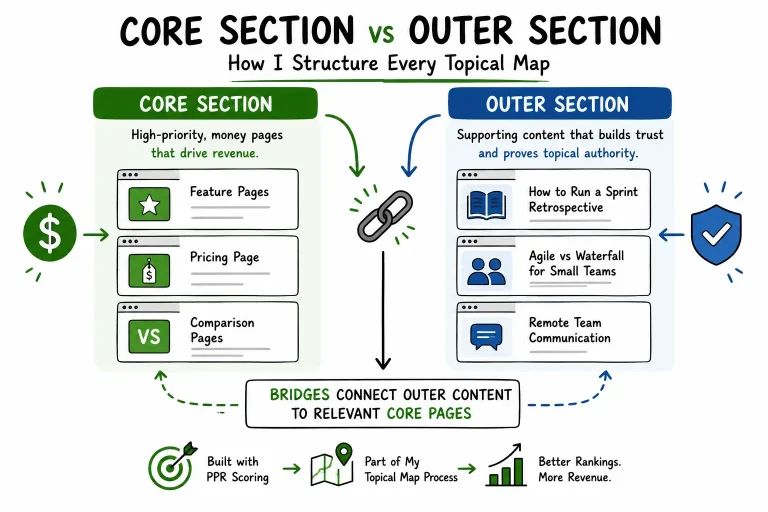
The Topical Map Framework
Core Pages (8–9)
- MOT Check
- Vehicle History Check
- Car Reg Check
- Stolen Car Check
- Free Car Check
- Ask MID
- MOT History
- HPI Check
Supporting Content (50+ Pages)
Each core topic had 4–6 supporting articles, creating strong clusters.
Challenges We Overcame
Low Domain Authority
Solved with topical authority.
High Competition Keywords
Solved with content depth.
User Confusion
Solved with navigation improvements.
Low Conversions
Solved with better UX.
Key Takeaways
- Topical authority beats backlinks
- UX directly impacts SEO
- Content structure matters more than volume
- High-volume keywords are achievable
- Quality content wins
Action Plan to Replicate This Strategy
Step 1 – Audit Your Site
- Clear service pages
- Strong CTAs
- User-focused navigation
Step 2 – Improve Content Strategy
- Avoid thin content
- Build topic clusters
Step 3 – Build a Topical Map
- Identify core topics
- Create supporting content
Step 4 – Optimize for Conversions
- Highlight primary action
- Reduce friction
Step 5 – Track Performance
- Monitor conversions
- Track engagement
Frequently Asked Questions
What is a topical map in SEO?
A topical map is a structured content plan that organizes main topics and subtopics to build topical authority.
Can you rank without backlinks?
Yes, with strong content, UX, and topical authority, you can rank without heavy backlinks.
What is topical authority in SEO?
Topical authority is the ability of a website to cover a subject comprehensively and become a trusted source.
About This Case Study
- Market: UK Automotive SaaS
- Data Sources: Google Search Console, SEMrush
- Strategy: Semantic SEO + Topical Authority
- Timeline: 4 Months
Final Thoughts – The Future of SEO
SEO is evolving with AI, LLMs, and semantic search.
The winning strategies are:
- Topical authority
- User-focused content
- Structured information
- Strong UX
SEO is no longer about gaming algorithms—it’s about solving user problems.
Want to Implement This Strategy?
If you want to build topical authority and grow your traffic without relying on backlinks, start by auditing your content and building structured topic clusters.
Or reach out to learn how to apply this framework to your business.
Propagate the Intel
Transmission Feed